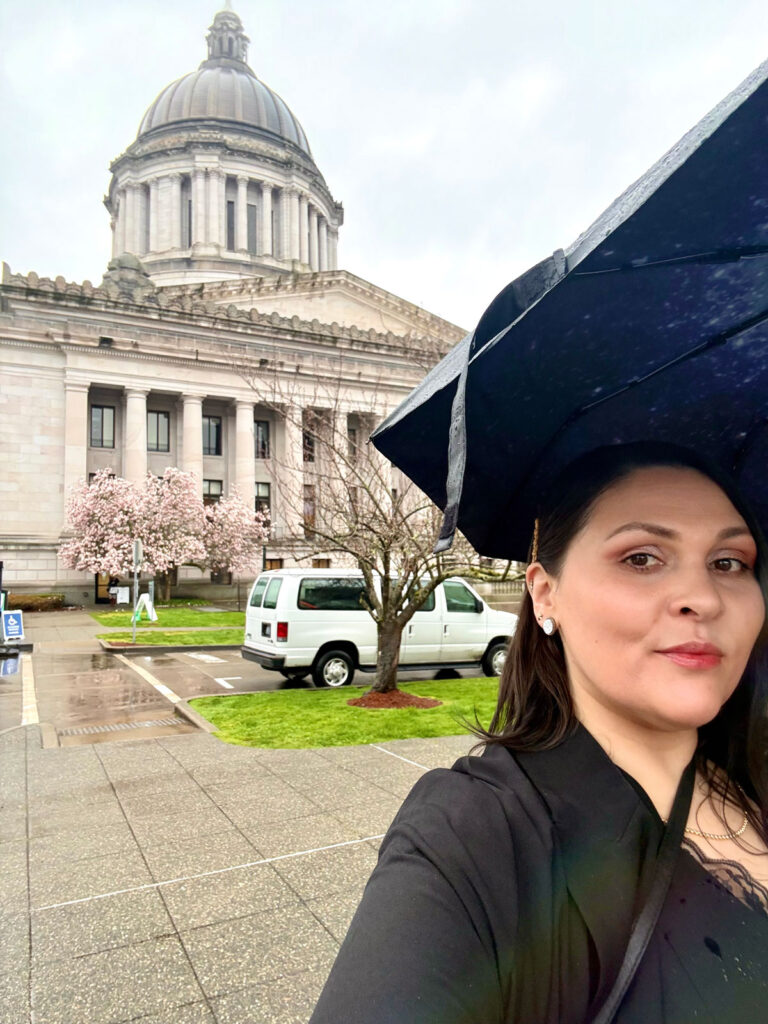
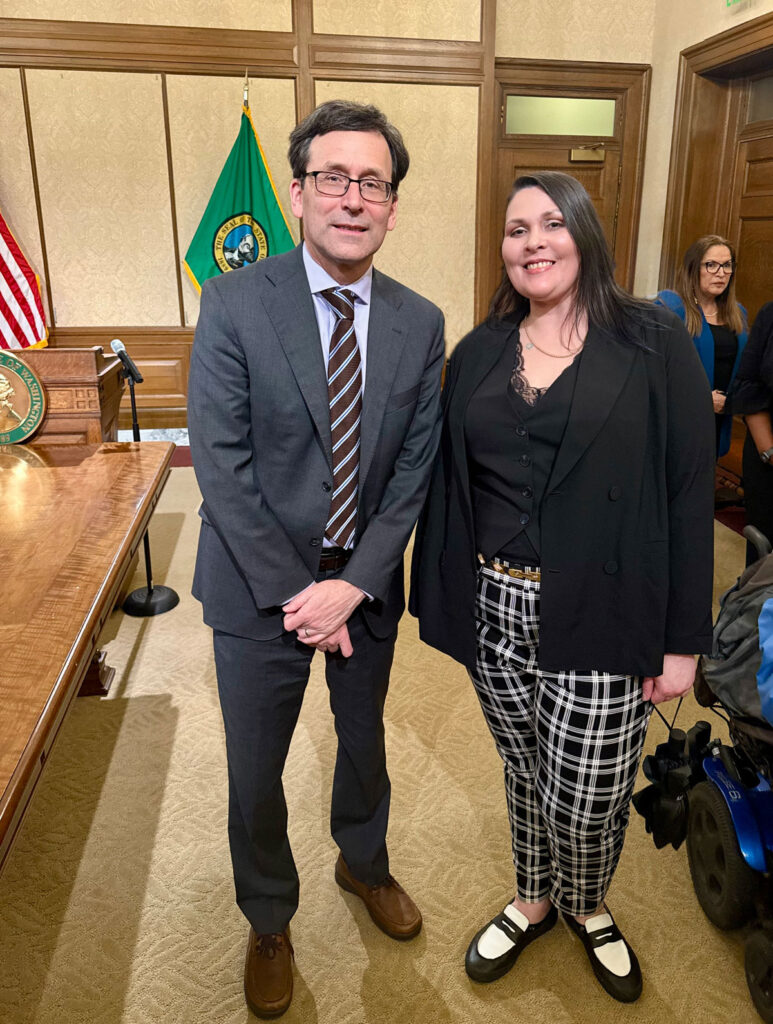
March 24, 2026, was another cold, rainy day in the Puget Sound region. But as I approached the Washington state Legislative Building in Olympia, umbrella in hand, I felt like the sun was shining, birds were chirping, and rainbows were beaming with pride. I stared up at the Capitol dome, snapped a selfie and climbed the steps to attend the governor’s signing of two bills that deeply mattered to me and were about to become part of Washington state law.
Waiting to enter the governor’s conference room, I glanced around, excitedly examining the painted portraits of past Washington state governors. As a first-generation, non-traditional graduate student whose childhood was shaped by trauma and intense instability, everything seemed significantly surreal as I reflected on how I got there.
I grew up in a small Northern California town, severely impacted by substance use disorders for decades. Both of my parents used methamphetamine, and we experienced housing insecurity, moving between apartments and relatives’ homes. I’m the oldest of four and often felt more like the parent than a child. When I was 12, we moved to Washington state, where my parents replaced meth use with alcohol. My dad died from liver cirrhosis when I was 15.
Even without stability and support, I thrived in school because it gave me an escape from home life. I’ve always struggled socially, however, and felt “different.” This was painfully difficult for me throughout childhood, and I was bullied. I studied how others interacted and formed friendships so I too could “fit in” and have friends.
Today, at 42, I still find friendships difficult. For years, I tried to change myself, judged myself harshly and pushed through things that felt overwhelming.
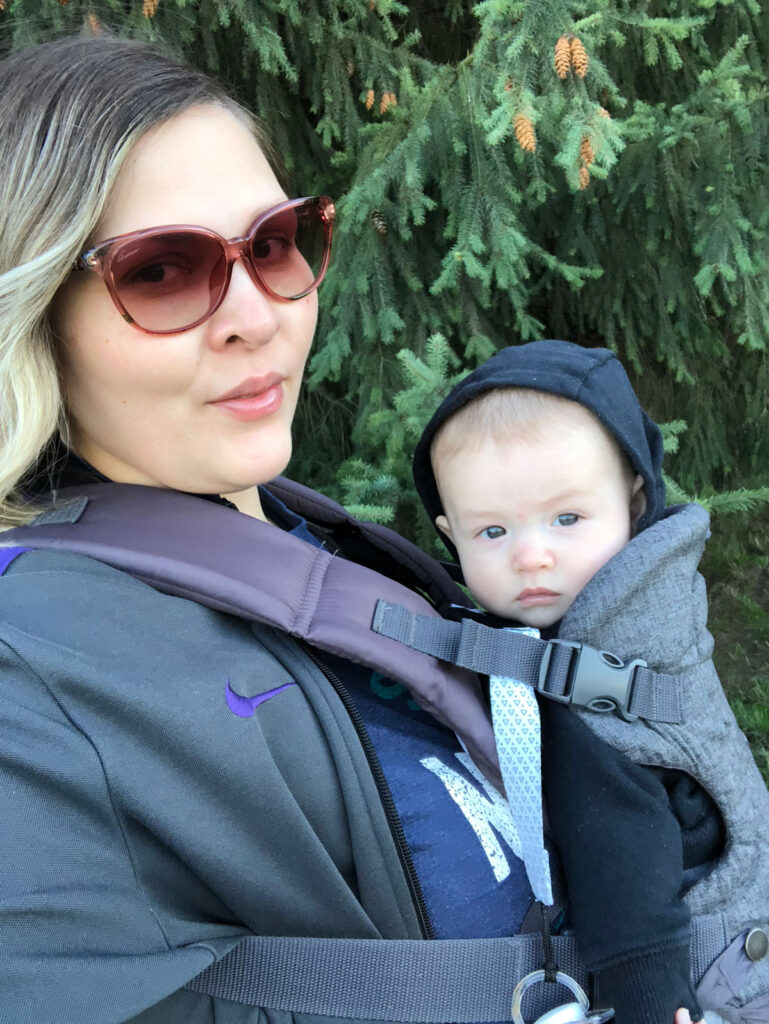
Almost eight years ago, I gave birth to my son Christian. Motherhood has been a transformative and explorative journey that has significantly changed how I see myself.
At 18 months old, Christian was clearly autistic. He didn’t respond to his name, lined up toys in intricate manners and is non-speaking — all the stereotypical autistic features. After his diagnosis, I immersed myself in resources and research. Eventually I came across information about how autism presents differently in girls/women and gender-diverse people, and how more adults are being identified as autistic because of a 2013 change in the criteria for autism.
I also learned the term “masking,” which is defined as consciously and unconsciously hiding autistic traits to blend in with neurotypicals. Reflecting on my early years, I realized how much I had masked my entire life.
I discovered that, like my son, I am autistic! That understanding gave me language for experiences I’d carried for years and helped me see myself with compassion.
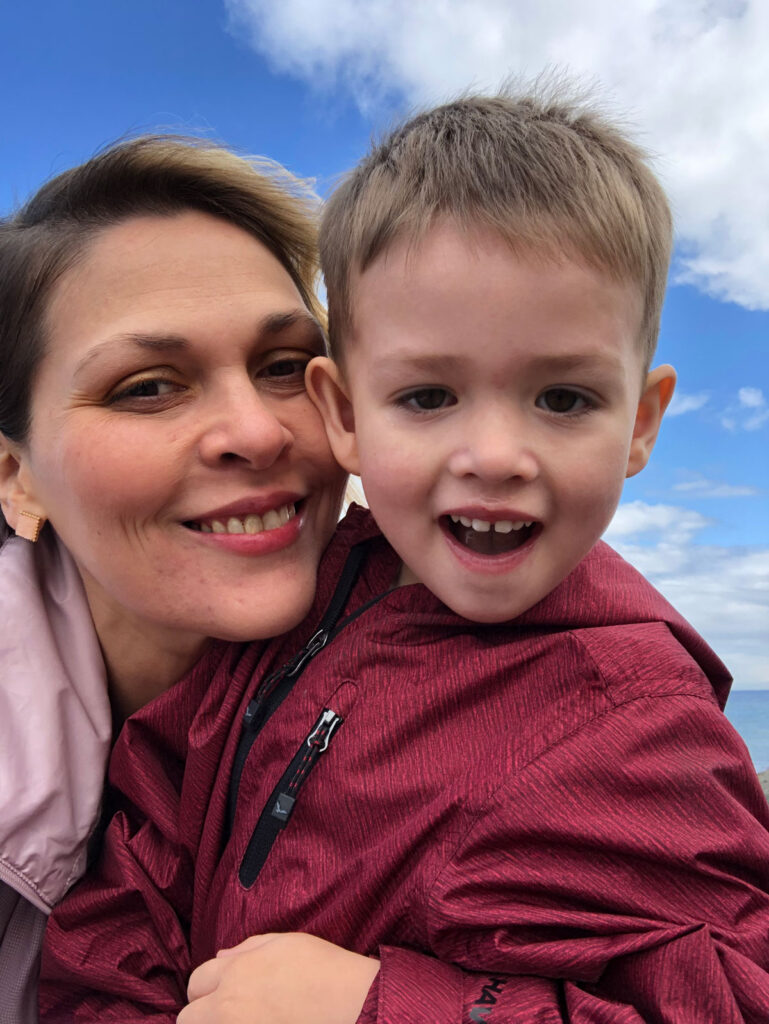
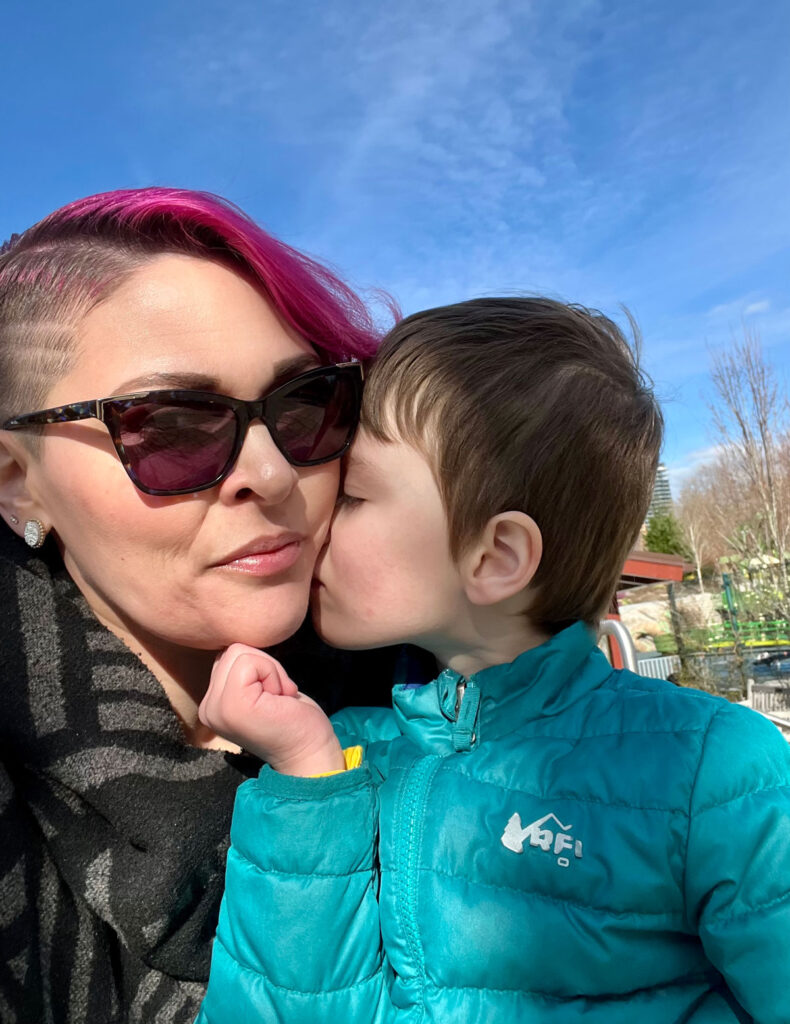
Although autism awareness has increased over the past decade, parenting an autistic child is often described through harmful narratives of burden and tragedy. I reject those narratives completely. My son changed my life for the better. In many ways, he saved it.
Immediately, advocacy became woven into my everyday as I navigated education, health care and community spaces. Through loving and advocating for my son, I came to understand disability access, exclusion, stigma and systems failure in a much deeper way. That realization ignited an intense purpose within me: I must do everything possible to create an inclusive future, acceptance and collective support for the well-being of my son and all disabled people.
That’s what led me to the Master of Science in Community Health & Social Justice at the University of Washington Bothell. I wasn’t looking to start a new career. I was looking for language, tools and frameworks that would help me better understand systems, community-building and social change. This program gives me exactly that: a place to connect my lived experience with rigorous research and advocacy to shape policy and improve systems for disabled people. The encouragement of my mentor, Dr. Jody Early, professor in the School of Nursing & Health Studies, has also helped me see that my lived experience is expertise — giving my work urgency, depth and purpose that is unmatched.
At UW Bothell, I’ve turned that purpose into action. I’ve used my drive for deep research with the legislative knowledge and advocacy skills I developed in “Health Policy, Systems and Advocacy” — a course taught by Dr. Nora Kenworthy, professor in SNHS — to push for change on policy issues that matter to the disabled community.
Several bills I advocated for were signed into law, and my advocacy for ESHB 1795, which addresses restraint or isolation of students in public schools and educational programs, and SB 5863, concerning the preservation and inspection of state historical records, led to invitations from Gov. Bob Ferguson’s office to attend both bill signings. I see March 24 as evidence that students — and moms — have the power to influence change, that persistence and passion are powerful attributes, and that directly impacted people belong in policy spaces. “Nothing about us, without us.”
This feels especially important to me during April, which is Autism Acceptance Month. Acceptance must mean more than awareness. We already live in a world full of awareness, and much of it has been shaped by misunderstanding and has caused significant harm, especially this past year.
Acceptance means listening to autistic people and valuing autistic lives. It means designing systems with and for autistic people from the beginning. It means building schools, health care systems, communities and policies that don’t force us to fight so hard for dignity, safety, accessibility and belonging.
As I continue my academic and advocacy journey, it’s imperative to me that all marginalized communities are involved in designing the system and policies that affect our lives, ensuring collective access. That commitment is guiding my next steps, including my selection for the Autistic Self Advocacy Network’s 2026 Autism Campus Inclusion Leadership Academy and for UW LEND (Leadership Education in Neurodevelopmental and Related Disabilities), a program that “prepares graduate-level professionals, self-advocates and family members to lead across clinical, policy, education and research settings.”
What continues to drive me is the future I want to help build: one where autistic and all disabled people are valued, where our experiences are respected and included, and where equity and accessibility are built into the systems that shape our everyday lives. That is the work I am committed to. My story still has many chapters yet unwritten.
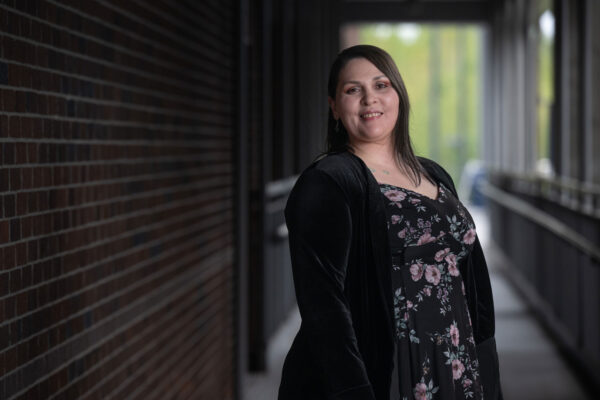
Tasha Le is a graduate student representative on SNHS’s Health Studies Curriculum Committee. Her academic and professional interests include disability justice, public health policy, inclusive education, accessible health care and community-centered systems change. She is also a student member of several public health and disability-focused organizations, including the American Public Health Association, Washington State Public Health Association, Association on Higher Education and Disability, Alliance for Disability in Health Care Education, and International Society for Autism Research.