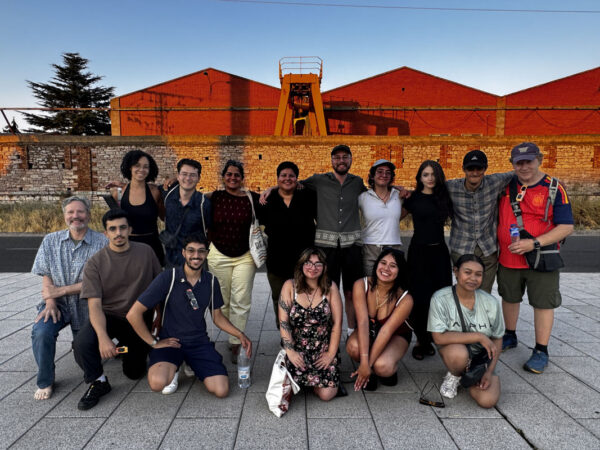
First launched in 2021, the Digital Scholars Program at the University of Washington Bothell provides traditionally underserved students with training in a diverse set of digital skills — such as marketing, data analytics, social media and data visualization — over the course of three quarters. One of the most vital components of the program is the summer project or internship that serves as the culmination of the knowledge and skills that students gained.
Through these internships, students have the opportunity to apply what they’ve learned in the first two quarters to the real world. In previous years, these internships were made possible through off-campus community partnerships. For this year’s cohort, however, students had the chance to apply their digital know-how directly to campus operations.
“This year, we worked with on-campus partners to develop internships for our Digital Scholars,” said Dr. Jesi Egan, director of undergraduate research & creative projects. “We wanted to strengthen our first-gen students’ sense of belonging at UW Bothell by helping them build relationships across campus and learn about how universities function. Our students learned so much from our campus partners about professional communication and workplace norms.”
Digital accessibility & branding support
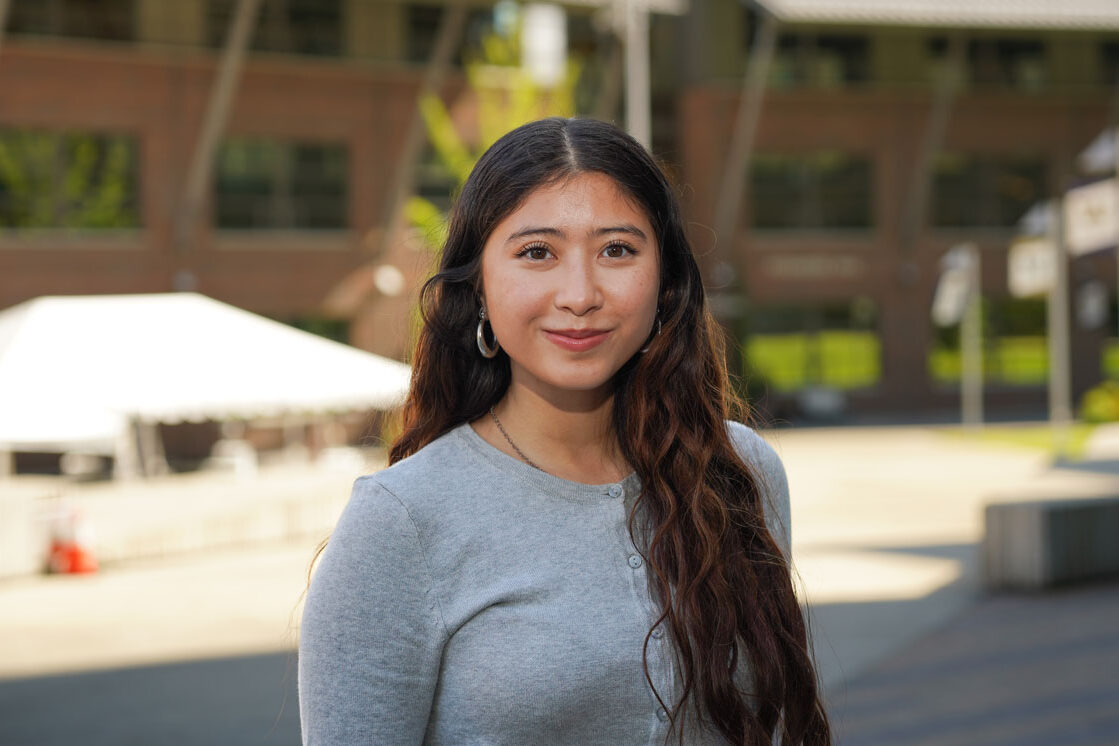
The internships encompassed a wide range of projects where students could work directly with various university departments and offices. From serving as a digital storyteller and archiver for the Diversity Center to working with Academic Affairs to update the organization’s digital marketing strategy, the available roles offered students the opportunity to gain hands-on experience while also supporting important work happening on campus.
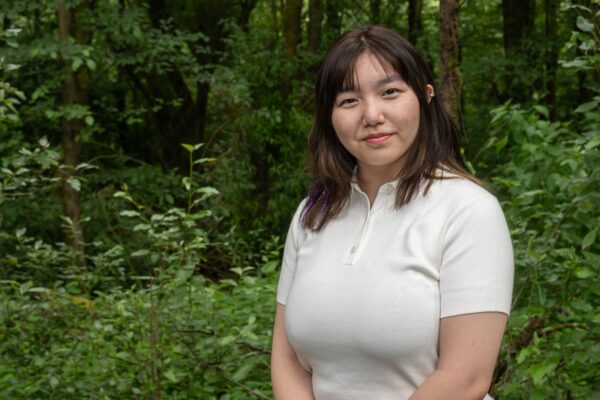
For her internship, Sarissa Boggs, a sophomore pre-major in Business Administration, worked in the Learning Commons to provide digital accessibility and branding support. Together with another Digital Scholars student, Boggs focused on making documents more accessible, applying UW branding to outward-facing materials such as flyers and social media posts, organizing the digital document library and conducting resource research.
“By contributing to DEI efforts and communication strategies, they’ve helped shape more inclusive and student-centered messaging,” said Cinthya Vieyra, academic success coach and internship supervisor. In addition to benefiting the Commons, she noted that the students gained real-world experience in design, communication, leadership and digital tools.
“This internship has helped them build a professional portfolio, gain confidence in presenting and planning, and grow as student leaders,” she said. “The skills they’ve practiced — from outreach to content creation — are directly transferable to future jobs, academic work or leadership roles on campus.”
This project sparked in Boggs an interest in project management that fits well with her overall goal of someday working in technology and innovation management.
“I already know that tech is going to be a big thing in the future, so my Digital Scholars experience has just further encouraged me to pursue that,” Boggs said. “I felt really lost before because I didn’t have a lot of the experience that people who took Running Start or had taken tech-related courses did.
“These internships are a great way to find your interests, what you like and don’t like, and learn more about your working style and how to collaborate as part of a team in a professional setting.”
Sarissa Boggs, sophomore, 2025 Digital Scholar
Troubleshooting scientific equipment

When Jennifer Cabarrus started as the Environmental Science lab coordinator for the School of Interdisciplinary Arts & Sciences a year ago, she inherited with the lab a Lachat QuikChem 8500 Flow Injection Analyzer. The analyzer, a tool used to measure analytes and ions from water samples and soil sample extractions, was unfortunately broken and the manufacturer planned to sunset the machine.
Troubleshooting whether the analyzer could still work seemed like the perfect fit for the Digital Scholars internship program, Cabarrus said. “It was a pretty complex and involved project. Not only did the students learn how to work the hardware and software, but they also learned basic lab skills, how to critically think through a problem and systematically develop a plan to address it. This project also helped illustrate that digital skills are valuable everywhere and may take them places they didn’t expect.”
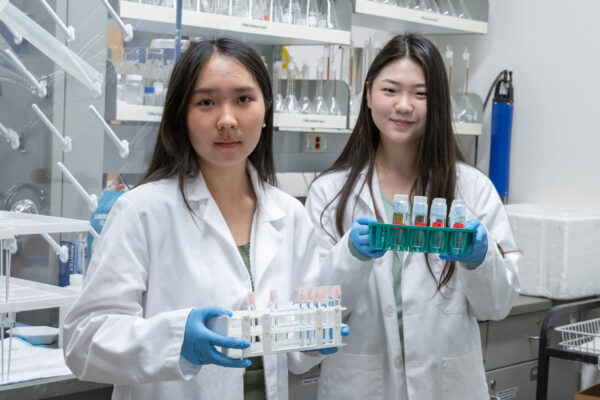
For Computer Science & Software Engineering majors Emmy Tumurbat and Seyeon Park, the project offered a perfect blend of gaining new skills while putting their computer knowledge to work.
“I was looking to gain both soft skills as well as technical skills, so I was really satisfied with my decision to do the internship,” said Park, a senior. “It involved a lot of communication skills and teamwork that ultimately ended up being the most important thing. It was an absolute pleasure to work with Emmy and to meet almost every day to work on troubleshooting the same problem. I felt like I belonged to a community and Jen was really helpful.”
Working together as part of a team with Cabarrus and lab instrumentation coordinator James Kussy, the pair was able to not only troubleshoot what the problem was but make the analyzer operational once more.
“When we were actually able to reach our goal and fix the machine and then were able to successfully run a sample through it, that sense of achievement was really satisfying, as was the collaboration and the supportive environment that helped us achieve that,” said Tumurbat, a sophomore. “I hope to do more internships like this in the future.”
A campuswide impact
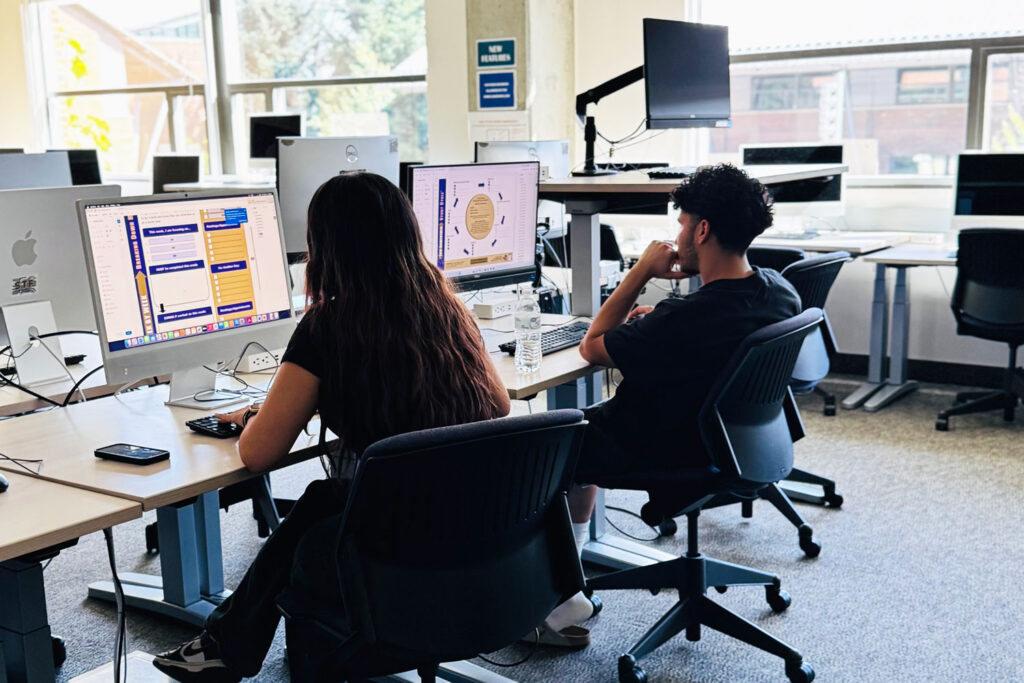
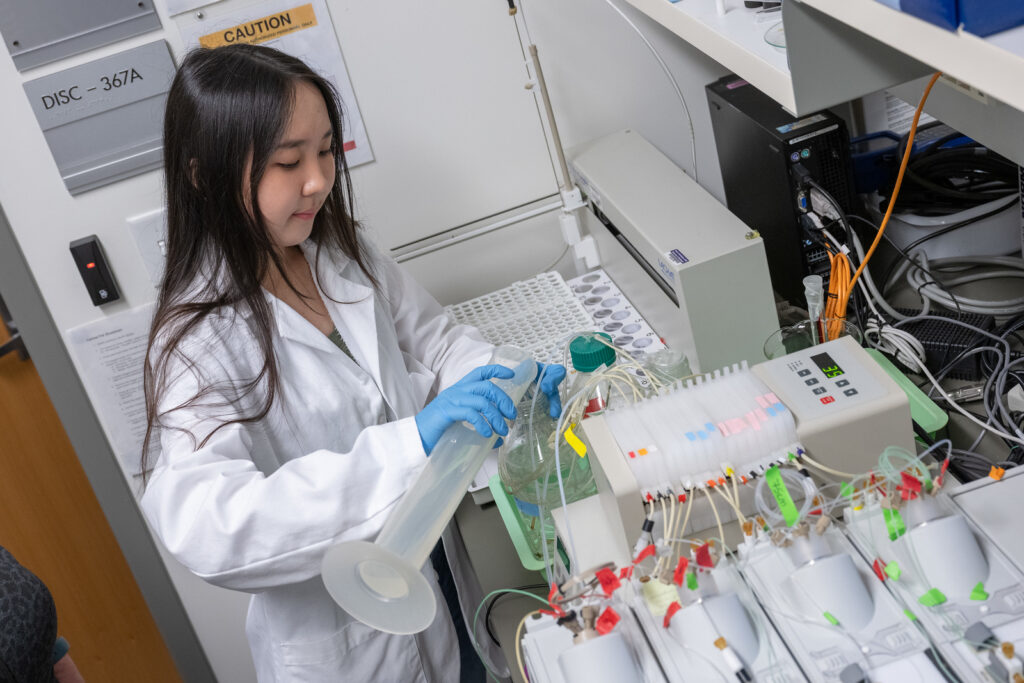
Through these internships, students gained experience, skills and a greater sense of community, Egan said, and their hard work is also reflected across the campus.
“We’re so proud of what our scholars achieved this summer, and so grateful to our mentors — who went above and beyond to welcome students into their teams and help them network with staff in different departments — as well as our donor WSECU for their generous support of this program,” Egan said. “The input and deliverables provided by these students will positively impact many other UW Bothell students’ experiences.”
Egan added that several students in the cohort have also extended their internships and will continue to work with their mentors through the academic year.