At his own pace: Paul Johnson redefines success
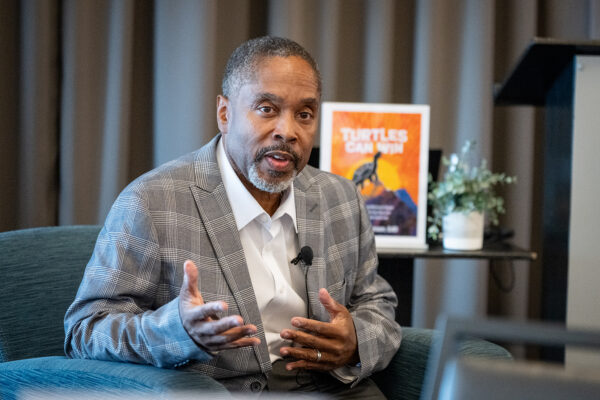
In his new memoir, “Turtles Can Win,” UW Bothell alumnus Paul Johnson reflects on learning differences, finding belonging and discovering that success doesn’t have to happen on someone else’s timeline.
For much of his life, Paul Johnson ’11 believed he wasn’t a good student.
School had never come easily to him. At 15, he left public school for Lakeside School, a private school where he found himself among students accustomed to achieving high academic standards and already looking ahead to some of the country’s most selective universities.
Johnson’s experience was different.
Not yet aware of his learning differences, he reached a conclusion that would follow him for years: Maybe he just wasn’t one of the smart kids.
“I just thought I was slow and not capable,” he said.
Four decades later, Johnson returned to Lakeside, this time as an administrator. Seeing the school again through the eyes of an educator gave him a new perspective on his experience there — and on the metaphor at the heart of his new memoir, “Turtles Can Win: How Learning Differences Taught Me to Run My Own Race and Still Cross the Finish Line.”
New perspectives
Released Aug. 28, “Turtles Can Win” traces Johnson’s six decades through education, family, career and the people who helped shape him along the way.
Johnson, who turned 60 this year, said the memoir is partly a reflection on what can happen when young people are defined too early by what others think they can or cannot accomplish.
“I realized that I’m still a turtle,” he said. “Turtles get to where they want to go, but they’re not on anyone else’s time schedule.”
Johnson was the first in his family to attend college, earning his undergraduate degree from Seattle University. But at the time, his goal was largely to get through school. He had not identified the learning differences that made traditional approaches to education difficult for him.
Years later, he attempted graduate school while working full time. He spent three years in a program but didn’t complete it. Eventually, he tried again.
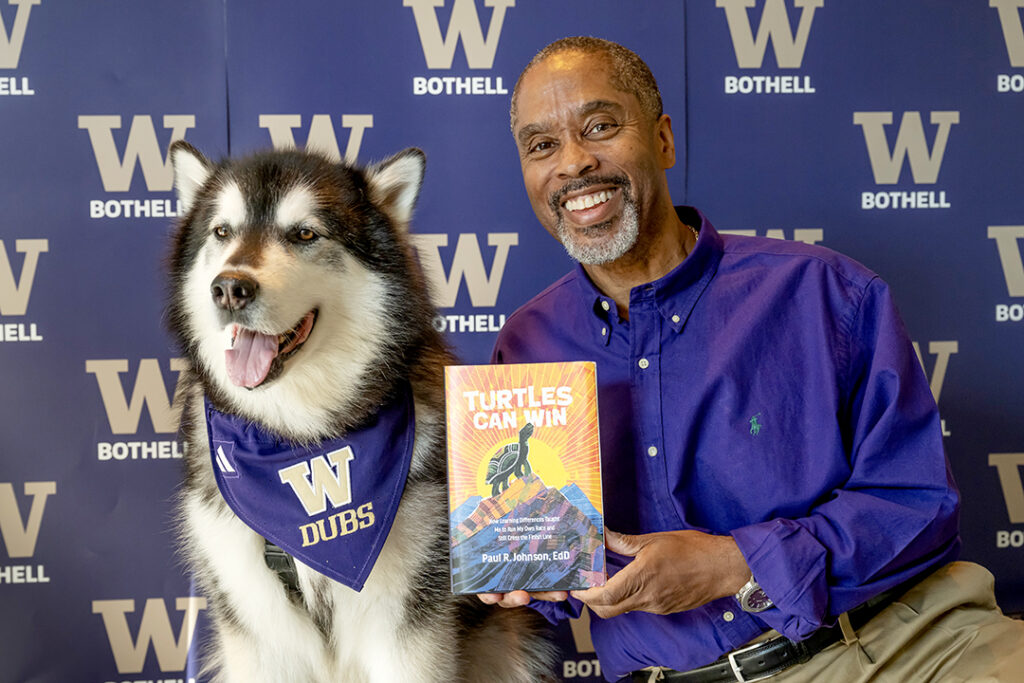
In 2009, at a point in life when many people might have concluded that school simply wasn’t for them, Johnson enrolled in the Master of Arts in Cultural Studies program in the School of Interdisciplinary Arts & Sciences at the University of Washington Bothell.
A turning point
This time, something changed.
“There wasn’t a prototypical type of student there,” he said, noting that his classmates ranged in age and came from different socioeconomic and cultural backgrounds.
“There wasn’t one type of student that did well or succeeded,” Johnson said. “So, I was able to get to a place where I could be myself — authentically myself.”
Johnson was also beginning to understand how he learned.
“I was able to get to a place where I could be myself —authentically myself.”
Paul Johnson
Through his work in human resources, he had supported employees with different learning needs and started recognizing strategies that worked for him, too. Enlarging text made reading easier. Recorded lectures let him revisit information when he could process it more effectively.
Instead of forcing himself to learn the way he thought a student was supposed to learn, Johnson began working with the way his own mind worked.
And he thrived: “It was the first time in my life I really enjoyed school or didn’t struggle,” he said.
UW Bothell became a launching point.
Redefining success
After graduating in 2011, Johnson continued his education, eventually earning two more master’s degrees and a doctorate. His professional path included leadership roles and work at organizations such as Boeing, Microsoft, Starbucks, Junior Achievement and the Seattle Symphony.
Yet “Turtles Can Win” isn’t an argument that everyone needs multiple degrees, an executive career or any other conventional marker of achievement.
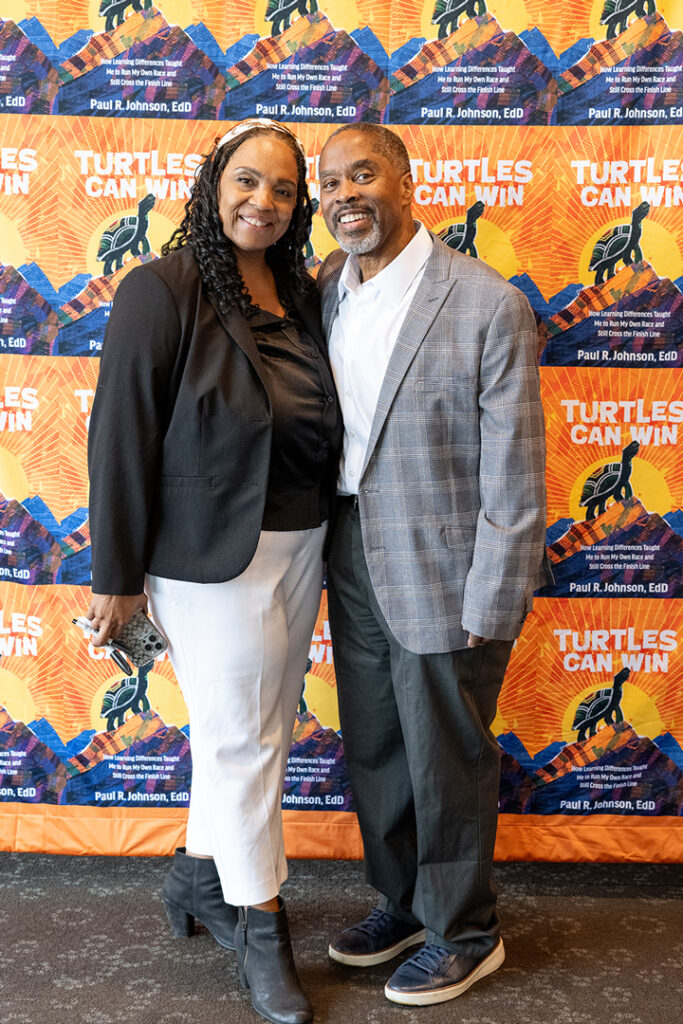
Johnson’s point is nearly the opposite. “We live in a society that rewards quickness and speed and doing things fast,” he told friends and family gathered at the Museum of Flight for his book launch. “I didn’t do it fast, but I did it.”
For Johnson, that distinction matters.
A mentor once encouraged him to think about life as a sporting event. At halftime, even a team that’s behind still has time to adjust. Johnson carried that idea with him as he returned to graduate school and reconsidered what achievement could look like on his own timeline.
Becoming a father added another dimension. As Johnson and his wife, Dr. Ricole Johnson, began attending conferences with their son’s teachers, the conversations prompted him to reconsider his own childhood. He eventually recognized learning differences, including dyslexia, that had gone unidentified when he was a child.
Those experiences sharpened one of the messages he hopes parents and educators take from the memoir: Be cautious about the labels placed on children. A student who struggles today isn’t necessarily destined to struggle tomorrow. A child who doesn’t fit one model of academic success may simply need time, different tools or a different environment to discover what they can do.
“Some kids are turtles,” Johnson said. “They may not develop until later.”
A place to belong
Johnson’s relationship with UW Bothell didn’t end with his degree. Over the years, he has remained involved with the University as a volunteer, donor and member of the Chancellor’s Philanthropy Leadership Council. The connection, he said, comes back to the sense of belonging he experienced as a student.
Having spent much of his career working in human resources, organizational change and inclusion, Johnson has thought deeply about what makes people feel they belong somewhere.
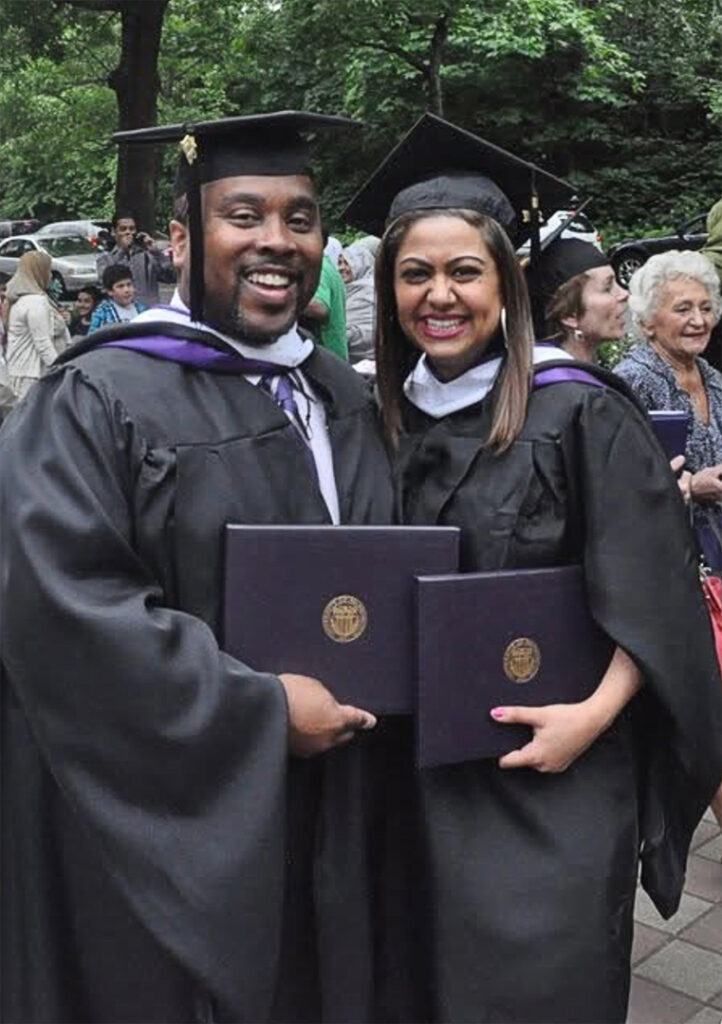
For him, UW Bothell has consistently been one of those places. “That’s one of the reasons I’ve been drawn to UW Bothell — because of the feeling of comfort that I have when I’m there,” he said.
There’s another reason: People asked him to come back. When University leaders invited him to stay involved and contribute his experience, Johnson responded.
“You go where you’re wanted,” he said. “I feel a greater desire to be [in a place] that I’m wanted, within that UW Bothell family.”
That sense of connection was visible at the launch of “Turtles Can Win.” Johnson’s longtime friend and UW Bothell classmate Priya Frank moderated the conversation about his memoir. The two graduated together in 2011 and have remained close ever since.
Still moving
Johnson began writing “Turtles Can Win” after contributing to the Press 49 book “A Collective Breath: Stories of Being Black in America and Visions of Change” in 2020 and completing the dissertation for his doctorate. The project became more personal as he reflected on his son’s educational experiences and his own.
At 60, Johnson describes himself as entering the “fourth quarter” of his life — not retiring but reaching a point where he wants to spend more time sharing what he has learned and helping those coming behind him.
The memoir is part of that work.
“Don’t work on someone else’s timeline or someone else’s schedule. Do it on your own schedule.”
Paul Johnson
He hopes parents and educators reconsider how quickly they define a young person’s abilities. He hopes students with learning differences see that today’s struggles don’t determine tomorrow’s possibilities. And he hopes anyone who has felt behind recognizes that there isn’t one timetable for a meaningful life.
“You can do whatever it is you want to do,” Johnson said. “Don’t work on someone else’s timeline or someone else’s schedule. Do it on your own schedule.”
Johnson’s race isn’t over. He’s simply running it at his own pace.