The University of Washington Bothell opened the Environmental Education & Research Center in 2022 at Saint Edward State Park in partnership with Washington State Parks. Since then, the center has become a site for the appreciation, research, study and stewardship of Pacific Northwest ecosystems.
The center is headquarters for UW Bothell’s Collaborative for Socio-Ecological Engagement, a University-led research and learning unit that hosts interdisciplinary and equity-centered place-based research and learning programs. The EERC also serves as a gateway that connects the UW Bothell community to partners beyond the park.
And through one of CoSEE’s latest partnerships, student interns took to the field to provide restoration support to Saint Edward’s sister park: Lake Sammamish State Park.
A tale of two parks
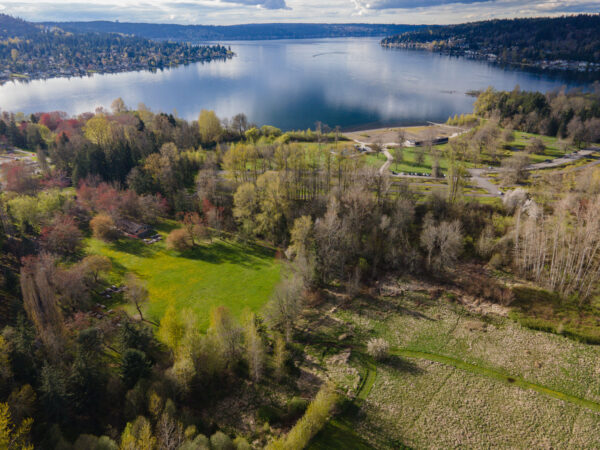
Located in Issaquah, Washington, Lake Sammamish State Park features 512 acres of forest, beaches and meadows. It is the second-most visited state park in Washington, frequented by visitors looking to swim, fish, bike and more.
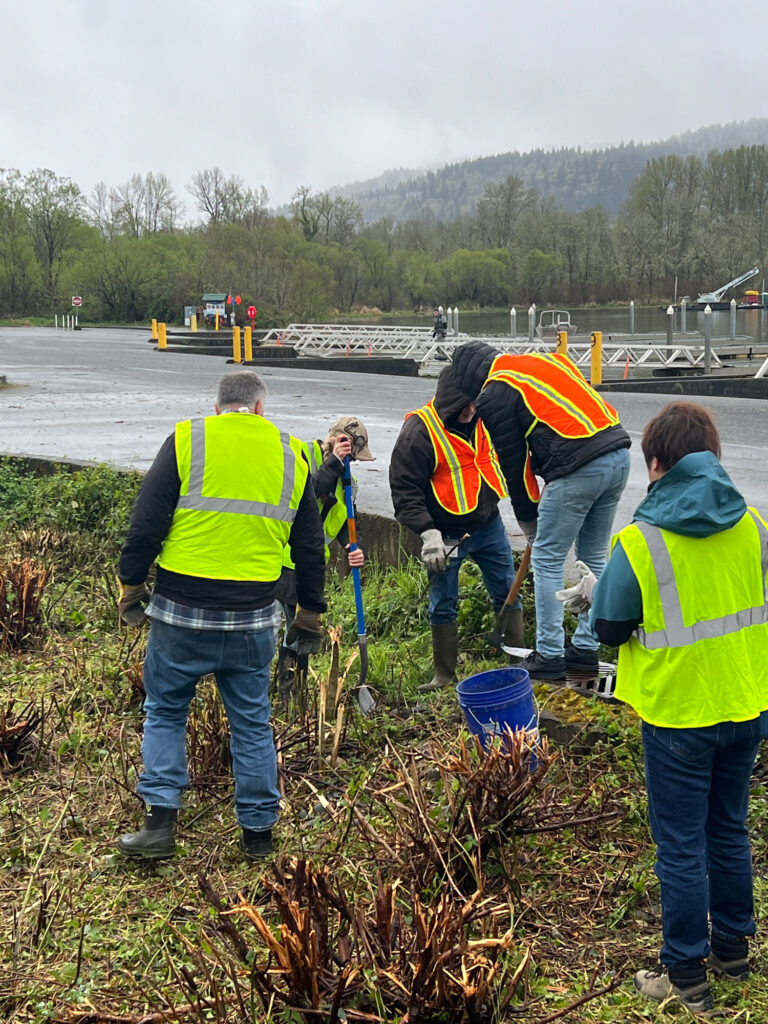
The park is home to many of the same flora and fauna as its sister park — and many of the same restoration challenges and needs.
Helping to manage those needs is the nonprofit Friends of Lake Sammamish State Park. Much like CoSEE, the organization facilitates restoration projects and volunteer events for the park.
CoSEE also involves student interns in its projects wherever possible, and many of its projects are even student-led. So FLSSP reached out to learn more about the collaborative and to see how a partnership might create more internship opportunities.
In spring 2026, the nonprofit hosted its first three interns from UW Bothell.
“The interns took on small projects that we, as a very small nonprofit, do not have the capacity to tackle,” said Sarah Polster Tribble, FLSSP operations manager, “including creating maps of our restoration areas and helping lead restoration events — projects we could only dream of doing one day.”
Savannah Greenwalt, who graduated from UW Bothell with a degree in Earth System Science in June, began her internship year supporting public-facing restoration events in Saint Edward State Park. When the opportunity came to work with FLSSP, she mentored another intern to cover her role while she transitioned to supporting the other park.
Comfortable with uncomfortable
“Getting to know both parks and the different ways they operate has been so cool,” she said. “I loved getting to connect with the people in both communities while restoring our local park environments.”
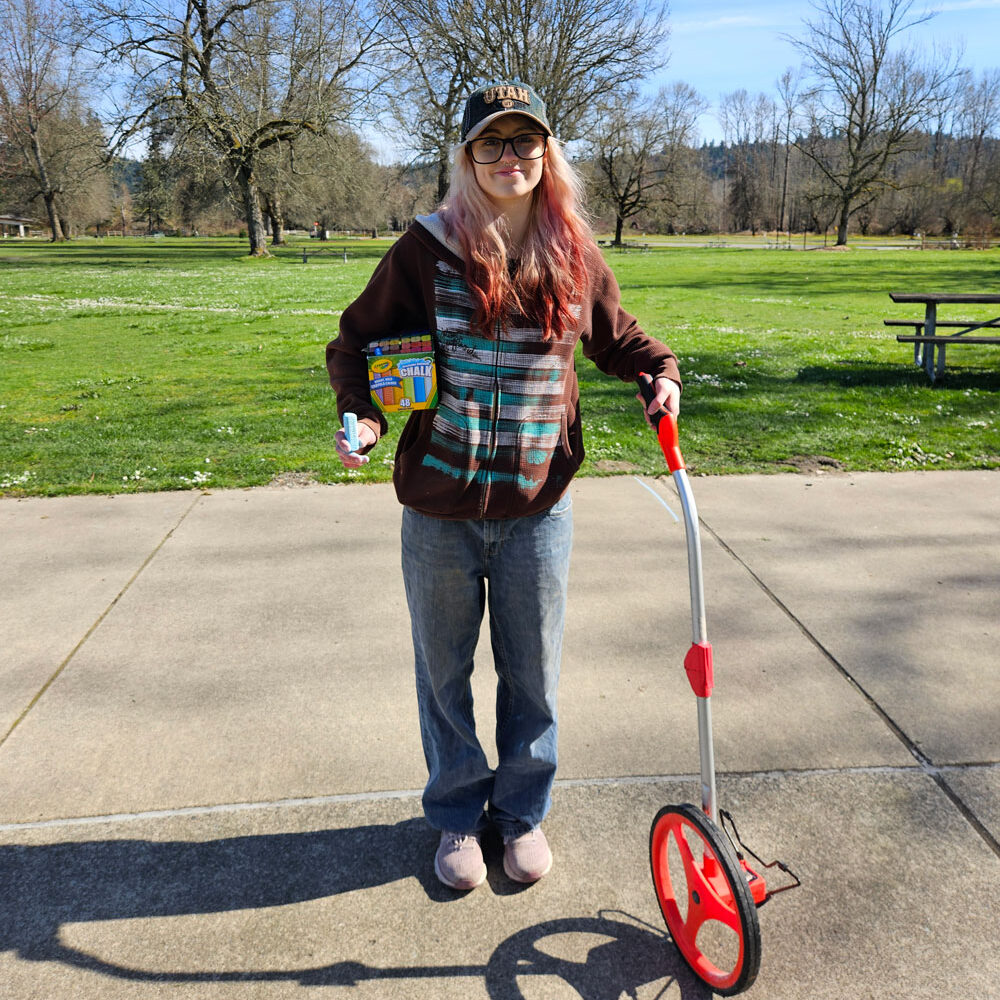
But leading public events was not something Greenwalt was experienced in or felt at ease doing. From preparing sites the day before to leading day-of activities and engaging with volunteers, her role was a lot more people-facing than she was used to handling.
“As someone who grew up very introverted, I had to get comfortable with the uncomfortable,” she said. “This was also a new field for me. I had never done restoration work before, but now I had to teach and lead groups of people.”
In the end, Greenwalt successfully led restoration events that included the removal of invasive species such as Himalayan blackberry, English holly and ivy, and supported other FLSSP events such as Spring into Adventure Fair and Walk n Wag.
“This internship has given me so much experience — with restoration work, leadership and public speaking,” she said.
“This internship has given me so much experience with restoration work, leadership and public speaking.”
Savannah Greenwalt, Earth System Science ’26
Maps of a new terrain
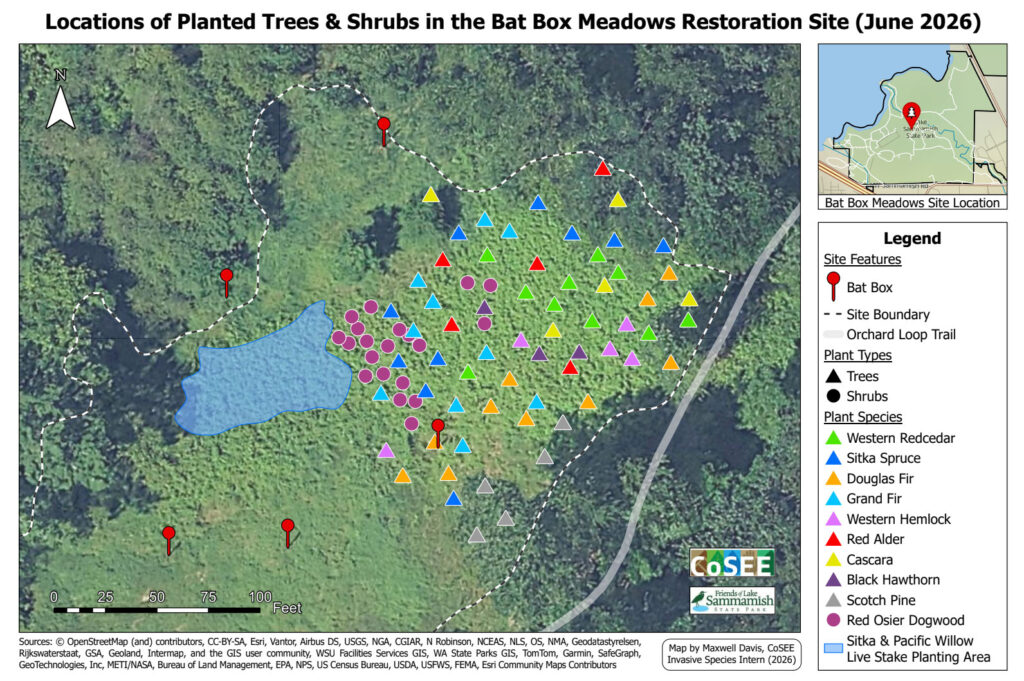
For his project, Max Davis created maps of the active ecological restoration sites at Lake Sammamish State Park, showing the locations and physical conditions of planted tree shrubs to help inform future efforts.
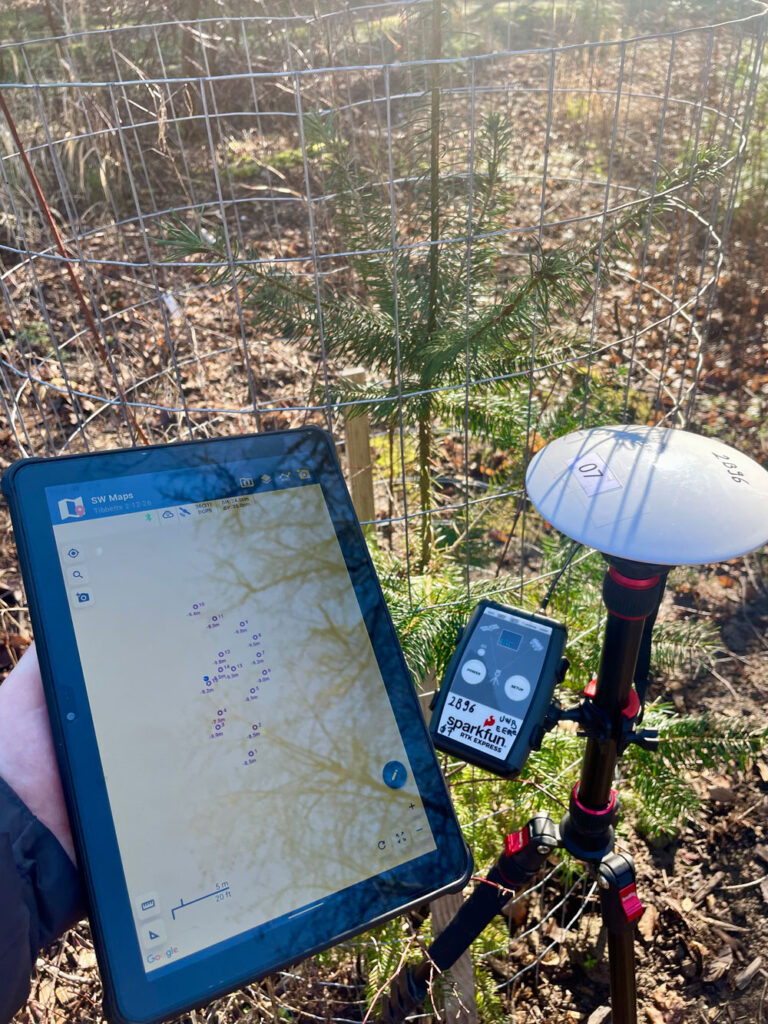
He already had experience mapping invasive species in Saint Edward State Park for one of his classes and was drawn to the internship as a chance to continue this work.
“During my internship work, I enjoyed spending time outside in the field the most because it was peaceful and made me feel connected to the landscape I was helping to restore,” said Davis, a senior majoring in Conservation & Restoration Science and minoring in Geographic Information Sciences. “This experience required me to solve problems on my own, find new techniques for mapping and identify new plants, which will help me in my future career.
“Overall, I feel more prepared as an environmental scientist after interning with CoSEE.”
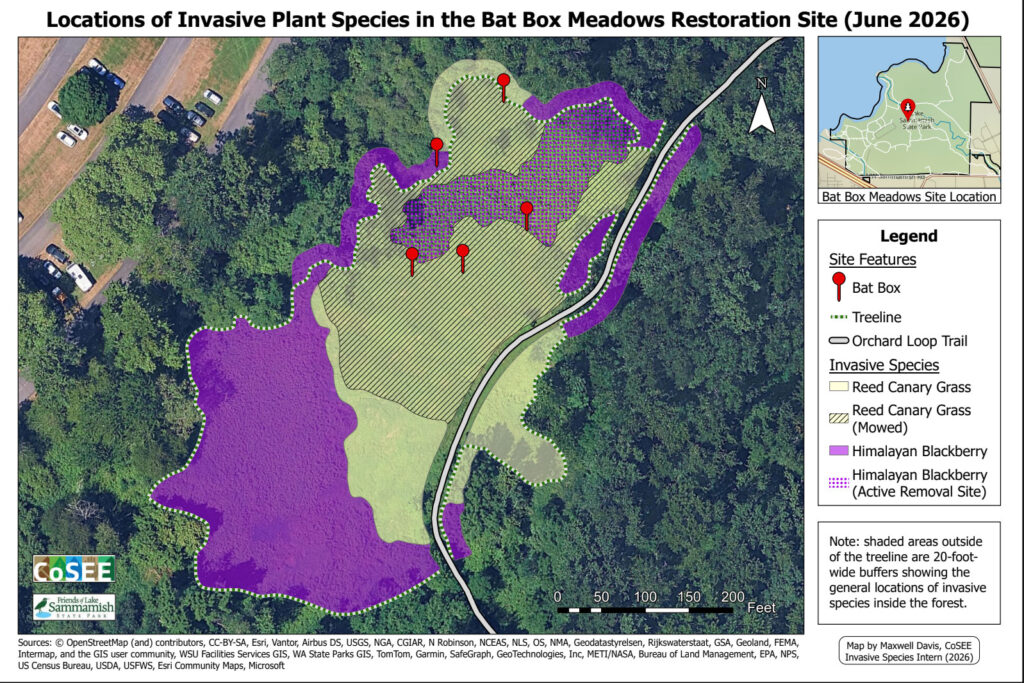
Similarly, Aysha Siddiqui mapped past and current restoration sites and color coded them based on the organizations who worked on each site — helping to provide an idea of where further management and future restoration may be needed.
“I am someone who enjoys seeing information in a visual way. Mapping the whole park and all the sites within it was a good way to visualize what the current ecosystem health is and where support is needed in the future,” said Siddiqui, a senior majoring in Conservation & Restoration Science and minoring in Urban Planning and Design (at the UW in Seattle). “This was a park that I was familiar with and contributing to improving the ecological health of it felt more personal.”
Restoration together
Both UW Bothell students reported that their park experiences tie directly into their career aspirations.
“In the future,” Siddiqui said, “I want to work in ecological restoration, specifically the early planning stages of site assessment.”
For her part, Greenwalt said, “I hope to work in a sustainable field doing work that betters the environment. I want to contribute to the restoration of our local ecosystems in any way that I can.”
Through internships such as these, students not only gain transferrable, real-world experience, but their work also has a real impact now.
The interns have allowed FLSSP to quantify the work the nonprofit has already accomplished, Polster Tribble said, and translate that information both to the community and to potential funding sources.
Their work has been invaluable, she noted, from the restoration events that create stronger community bonds to the maps that help community members to see changes in the environment.
“I have been impressed all around by the interns,” she said, “— their knowledge, hard work and their amazing skills.”