When I was in elementary school, some of my classmates spent their days in a separate building. Same age as the rest of us but kept apart — different classroom, different schedule — and they didn’t come out to recess when we did. I don’t remember how it started, but I remember going to their classroom to spend recess with them. Playing games, eating snacks and hanging out.
And I remember feeling confused, and a little upset, about why they were over there in the first place. I understood that they were different from me and they needed different things, but we were all kids. It seemed strange to me that someone had decided they belonged somewhere else.
I didn’t have language for it then, but that feeling never really left me.
At that same time, I didn’t realize that I, too, was the kind of kid who needed something different.
The little white dog
I’m sitting in the hallway in third grade, doing reading testing. The book is about a little white dog with a red collar; I can still picture the cover. What my teacher didn’t know was that I couldn’t actually read most of the words on the page. I’d gotten good at memorizing. I knew enough words to fill in the gaps, to use the pictures and context to fake my way through a story convincingly enough that no one really noticed, or if they did, they didn’t care.
That day, she noticed. “Did you memorize the words in this book or are you just looking at the pictures?” she asked. “Can you actually read any of the things in here?”
I remember how that felt. Like being told I wasn’t good enough, wasn’t smart enough, hadn’t worked hard enough. So, I did the only thing I knew how to do. I told myself that if I just worked harder, I’d finally understand how to read.
That moment stayed with me for years before I had an answer for it. I was later diagnosed with a learning disability. My mom, worried, had taken me to specialist after specialist, and I went through years of reading interventions and slowly built up coping skills.
By the time I fully understood what was going on, I was in high school, and that understanding changed my life. Not mainly because of the extra time on tests or getting copies of the PowerPoint lessons but because it explained something I’d carried for years. Everything really had been that hard. I hadn’t been lazy or slow. I’d been working three times harder than everyone around me just to keep up, in a system that was never designed with me in mind.
Finding my way to teaching
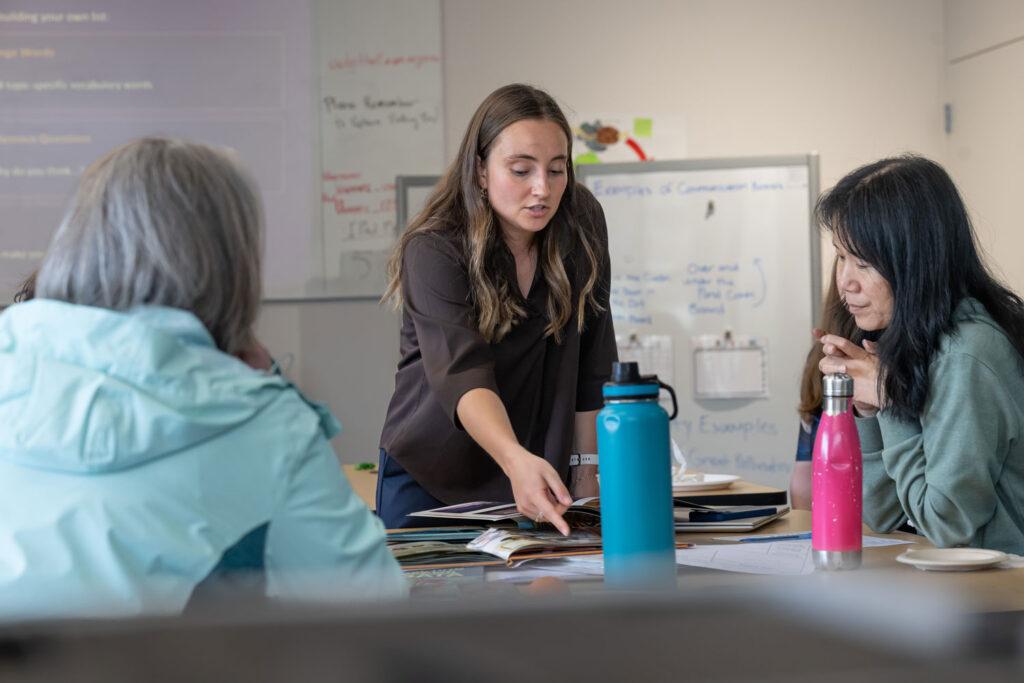
I didn’t set out to become a teacher. In high school I volunteered at a therapeutic horseback riding center and thought I might go into occupational therapy. I liked the hands-on work, meeting people exactly where they were and helping them achieve milestones.
But in college, talking with friends who were education majors, I started to feel a pull. The more I learned about teaching, the more it felt like the place where I could do something to help shape a world that I wanted to live in, to help give children experiences that I never got.
Occupational therapy would have let me help people, too, but in different ways. And what I really loved about teaching was the community building, connecting with parents and sustained relationships with children.
What pulled me wasn’t just a love of working with kids. It was a conviction that there’s a better way to do education, one that designs for everyone to succeed from the start — instead of building a system that works for some students and then patching on interventions and accommodations for the rest.
From classroom to environmental learning
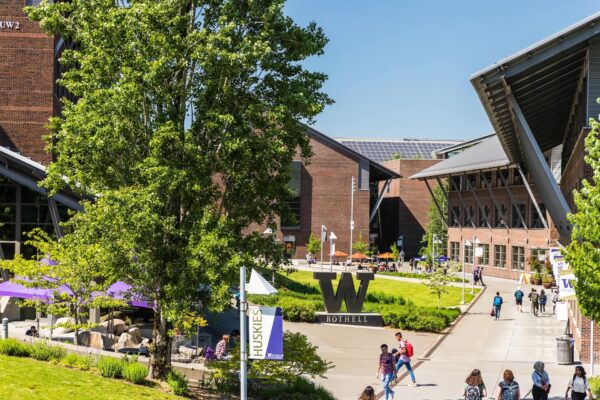
That belief followed me into my first classroom. Before joining the University of Washington Bothell’s Collaborative for Socio-Ecological Engagement, I worked as a special education teacher in Chicago Public Schools, teaching students from preschool through fourth grade with a wide range of support needs.
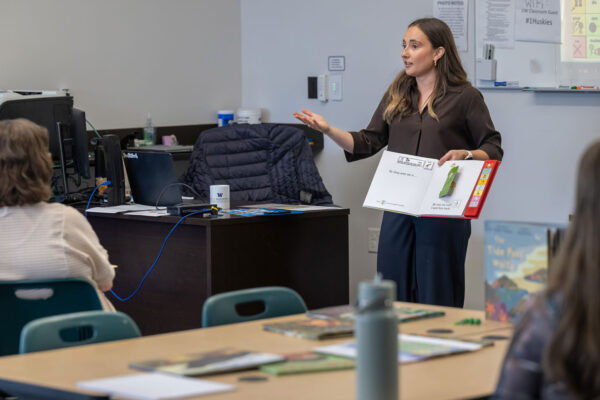
One of the things I found that helped my students was adapting children’s books. I’d add core word vocabulary to support students who use augmentative and alternative communication (AAC), embed prompts and questions, add sensory pieces, and build in ways to participate that hadn’t been available to them before. These weren’t just reading exercises. They let students join a shared story, work on communication and literacy goals, and be part of the group in ways the original books never allowed.
I also noticed something about my students: They were endlessly curious about the natural world. Worms, butterflies, dirt, whatever they’d found on the playground. My students had many questions about how the world worked and what they were seeing on the playground — and I wanted to bring that curiosity back inside and let it run through the whole day, not just save it for the one hour a week we called “science.”
Our school days get chopped into subjects, but learning doesn’t happen in boxes. It’s happening all the time, across topics, no matter where we are or what we’re doing. So, if I could start working as a teacher to find books that connected literacy, math, science and social emotional learning, then I didn’t need to feel constrained by the 30 minutes a week I had for science. I could just weave it into the other time blocks and subjects that the district had placed at a higher value, the ones that got 90 minutes a day.
Later, I pursued my master’s at the University of Washington, completed an outdoor education residency and studied the impact of inclusive outdoor spaces. That’s when I saw the gap even more clearly — who was invited to participate in the systems and who was left out.
I also noticed that there were so many wonderful children’s books about nature and science, so why had I never heard of them before? So I started asking different questions: What if I made it easier for teachers to say yes? What if the accessible, environmental, cross-disciplinary book was also the easy one to pick up?
Building the CoSEE Adaptive Library
That question became the Adaptive Library.
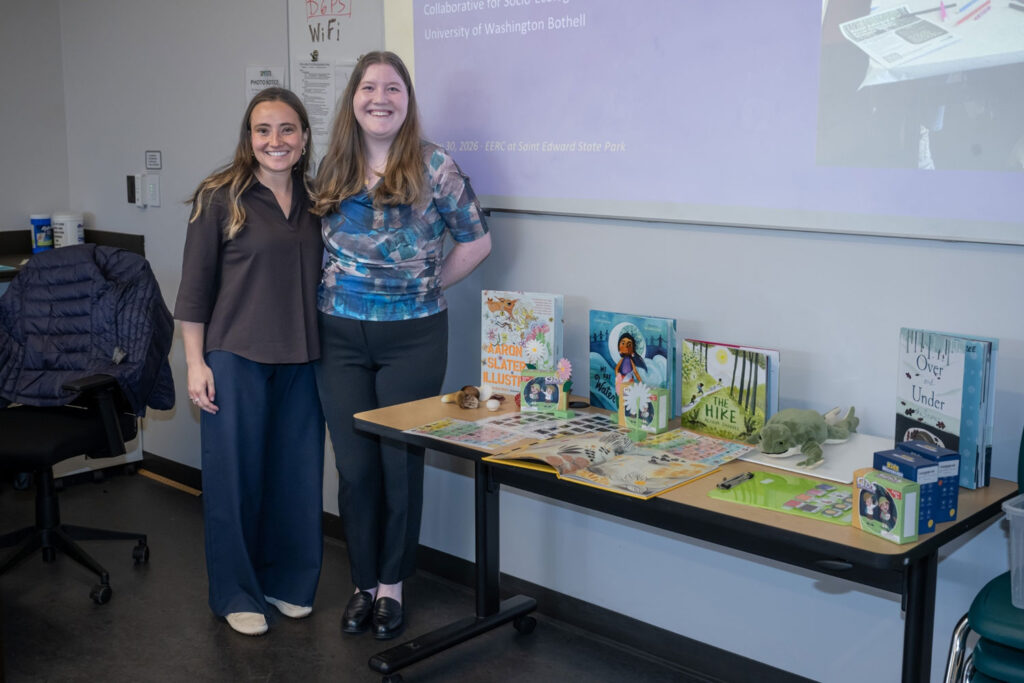
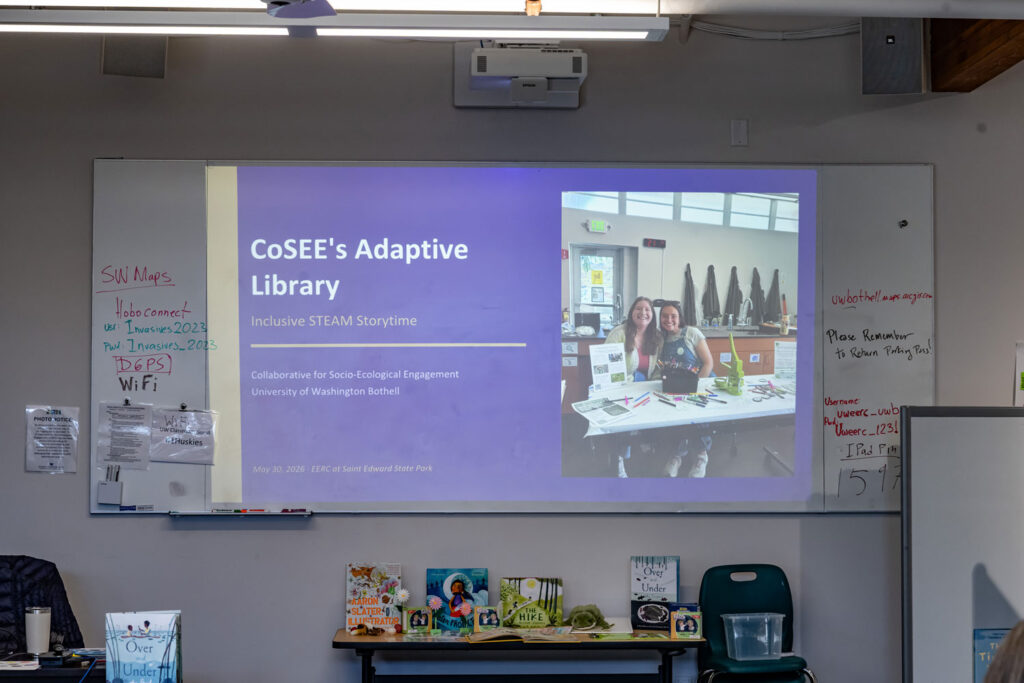
The Adaptive Library is a growing collection of children’s books, adapted so that more learners — including students who use AAC or receive special education services — can meaningfully take part in environmental and STEAM (Science, Technology, Engineering, Arts, Mathematics) learning.
We identify STEAM-focused books that explore science, technology, engineering, arts and math through environmental topics, and we rebuild them with the supports that make participation possible: embedded core and fringe vocabulary, verbal prompts, sensory materials, communication boards tailored to each book, and chances to practice math and literacy along the way.
Many of the books connect to hands-on kits and activities, so a story can move off the page and into a child’s hands, in the classroom or out in the field.
Some of the books are also co-curated with Dr. Cynthia Chang, associate professor in the School of STEM, and Dr. Jennifer Atkinson, teaching professor in the School of Interdisciplinary Arts & Sciences, through their first-year Storytelling & Ecology course.
In other words, it’s not just a collection of books. It’s a way of helping every student see themselves as part of the natural world and as someone with something to say about it.
Sharing the work
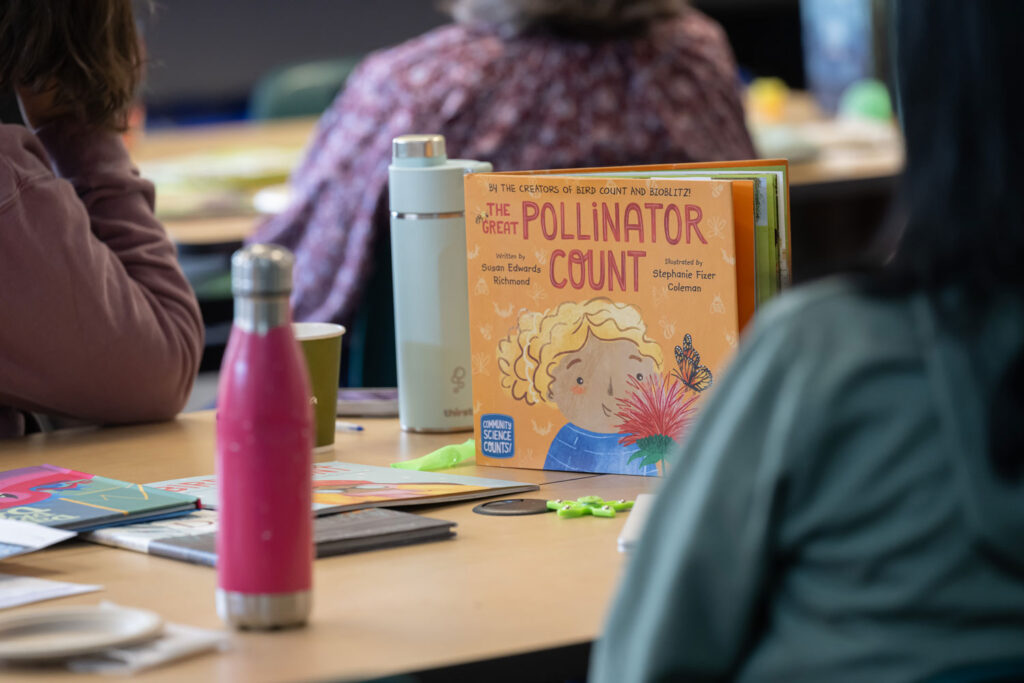
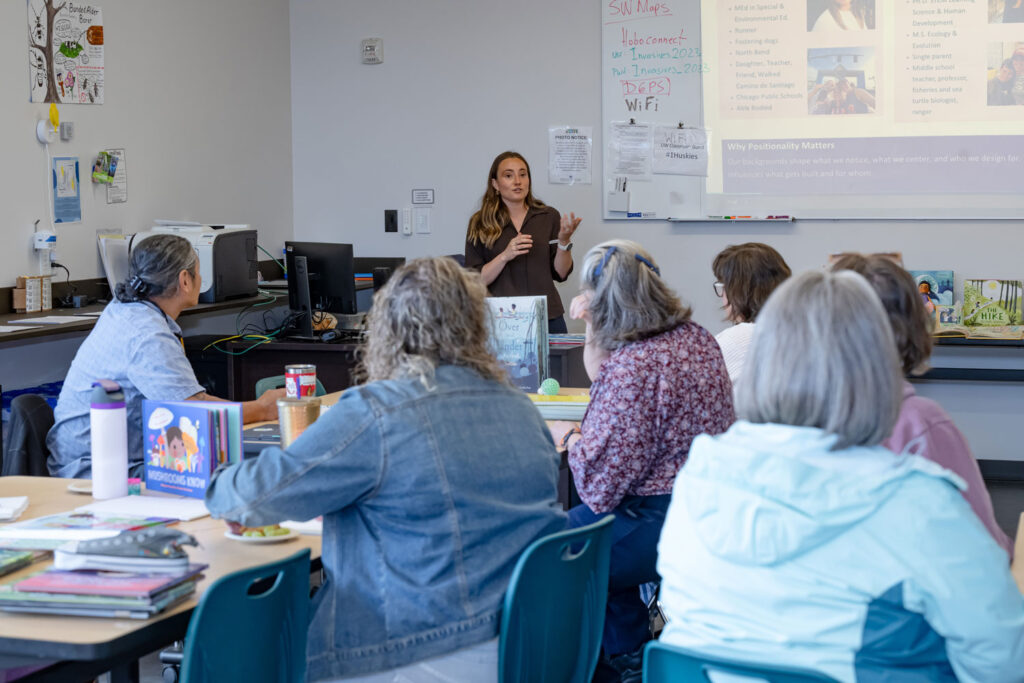
This past year, the Adaptive Library moved beyond our own shelves. We hosted our first professional development event for educators, and people came from Tacoma to Bellingham, including music teachers, special education teachers, librarians and science educators.
We walked through how to build an adaptive book and why, then handed the work back to the room and asked them to design their own adaptive pieces, for our books or for the ones they already teach.
Educators shared books from their own classrooms, suggested titles we should add and got into rich conversations about which stories matter and why. We came away with new ideas we’ve already started building, such as an accessible public list of every book in the collection, adaptive pieces tailored to specific learning goals and a free Canva template we now share on request so educators can adapt their own books using our tools.
Creating this library has been one of the greatest joys of my career.
Looking ahead
The Adaptive Library keeps growing, and this summer four students and our program assistant, Kaylin Datwyler, have been adapting new books and building the materials that go with them. They are also planning a Storytime event where they will be reading the adaptive books and inviting community members and families into the classroom to share the library with them.
It’s been beautiful to watch students from many different backgrounds engage with these books, asking questions, imagining and helping build something better than what they were handed.
That’s really what this is about. I know I can’t redesign the entire education system. But I can make an impact where I have influence, and I can imagine a world where things are different, where no kid sits in a hallway convinced they’re just not working hard enough, and no kid spends recess wondering why their classmates are kept in a separate building.
I can help my students imagine that world, too.
Learning doesn’t happen in boxes. Neither should the chance to be part of it. That’s the world I imagine when I think back to the little white dog on the cover of that book and to the classroom down the hall where kids my age spent their days apart from the rest of us.
No one should have to sit outside the room where the rest of us are learning and becoming decision makers about the world around us.
Maddie Iem is program manager at the Collaborative for Socio-Ecological Engagement.