D.C. Human Rights Seminar alumni share their stories
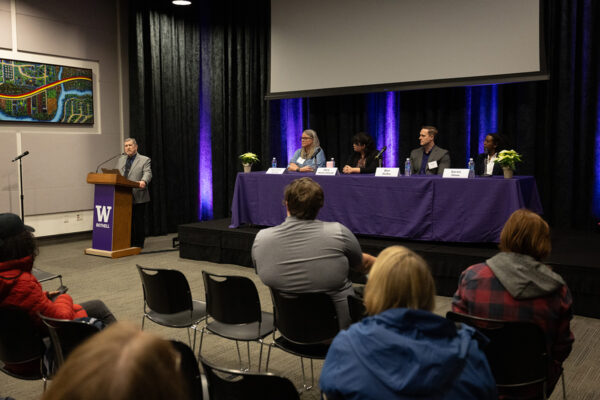
Each year, as part of the Washington, D.C., Human Rights Seminar, a cohort of University of Washington students visits the nation’s capital while completing research into human rights.
This year, on International Human Rights Day, alumni from the School of Interdisciplinary Arts & Sciences course gathered to reconnect and share their experiences.
Senior Lecturer Bruce Kochis and Professor Ron Krabill, two faculty members who have been instrumental in developing the class since it began in 1991, hosted the reception, which also served as a fundraiser for the seminar.
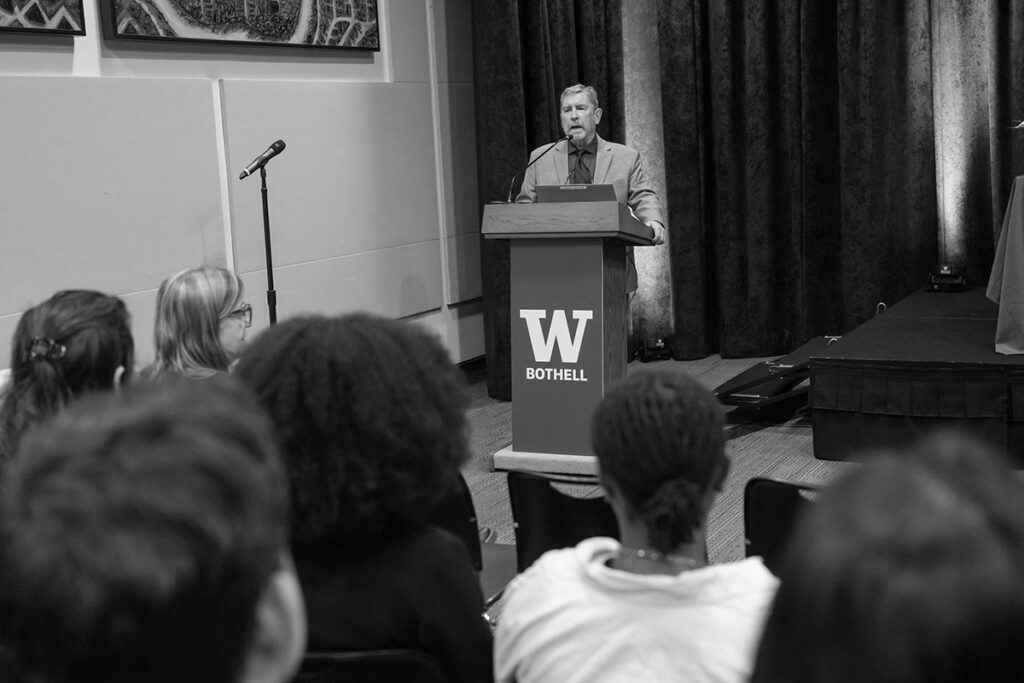
“It takes courage to look directly at the worst things humans do to one another and still commit to addressing them.”
Bruce Kochis
Dr. Kochis spoke about the importance of the class in helping students advance human rights. “It takes courage to look directly at the worst things humans do to one another and still commit to addressing them,” he said. “I hope their work contributes to our knowledge and helps alleviate suffering.”
Dr. Krabill introduced an alumni panel before leading a discussion about their experiences in the class. Joining Krabill were:
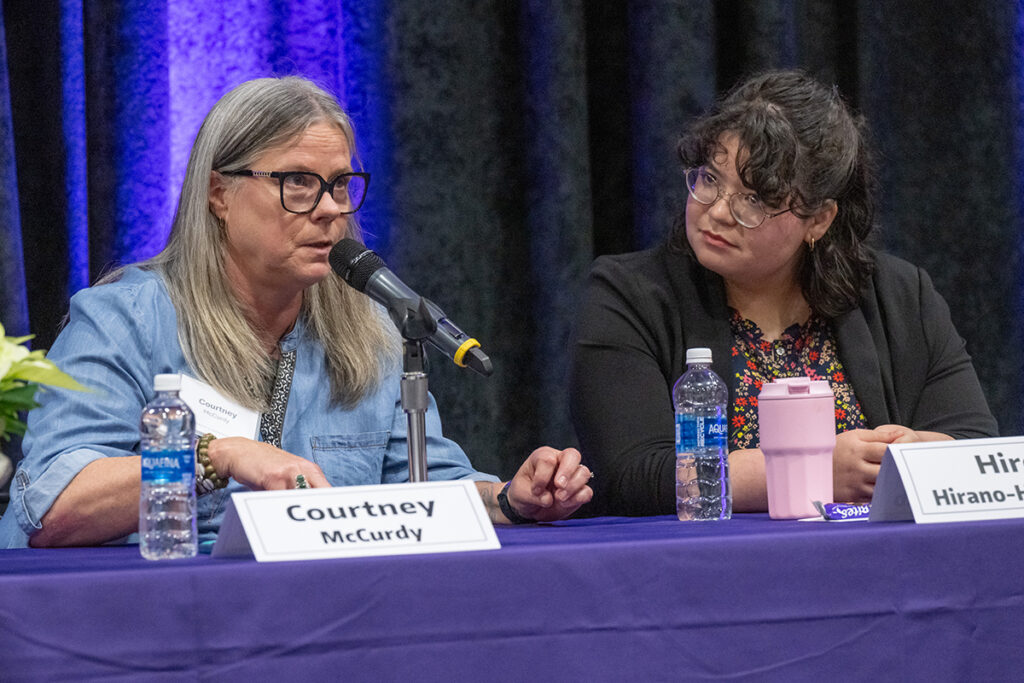
- Courtney McCurdy, Global Studies ’03, participated in the 2002 seminar. McCurdy is currently director of private sponsorships at Church World Service in North Carolina and previously worked in roles supporting refugees.
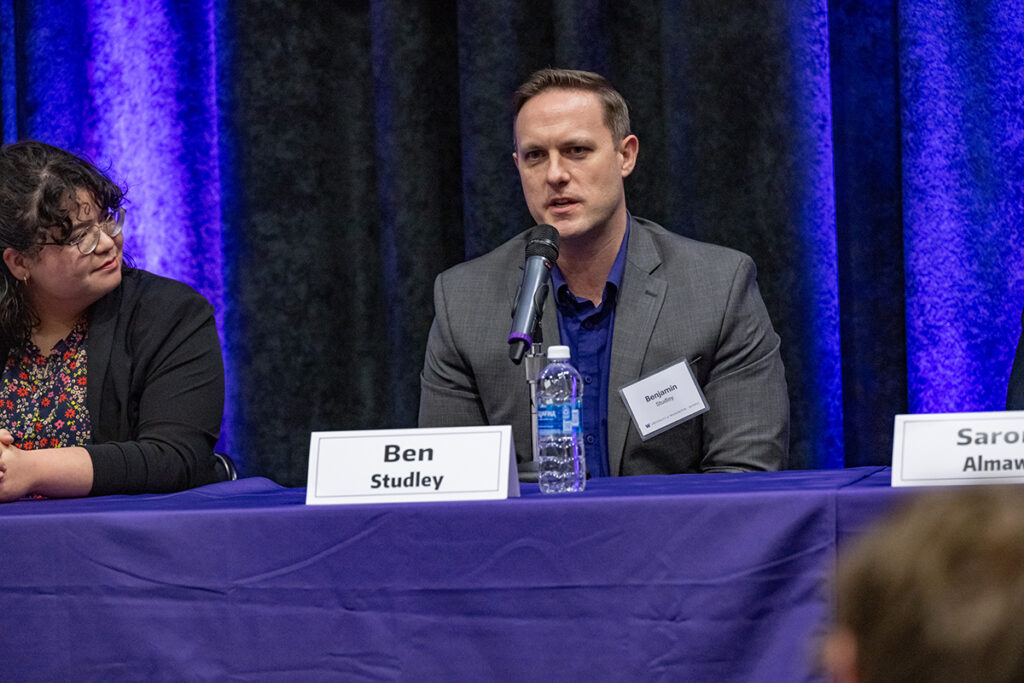
- Ben Studley, a triple UW Bothell alumnus in Community Psychology ’16, Policy Studies ’18, and Business Administration ’25. He serves as a senior constituent services representative for Congresswoman Suzan DelBene and is a member of the UW Alumni Association Board of Trustees.
- Hiro Hirano-Holcomb, a current UW Bothell senior majoring in Law, Economics & Public Policy with a Human Rights minor while also serving as ASUWB’s Director of Legislative Affairs
- Saron Almaw, a 2022 Business Administration alumna who is now a post-baccalaureate student in Law, Economics & Public Policy. She is a 2022 Husky 100 honoree with experience advocating for garment workers’ rights at Gonzaga University.
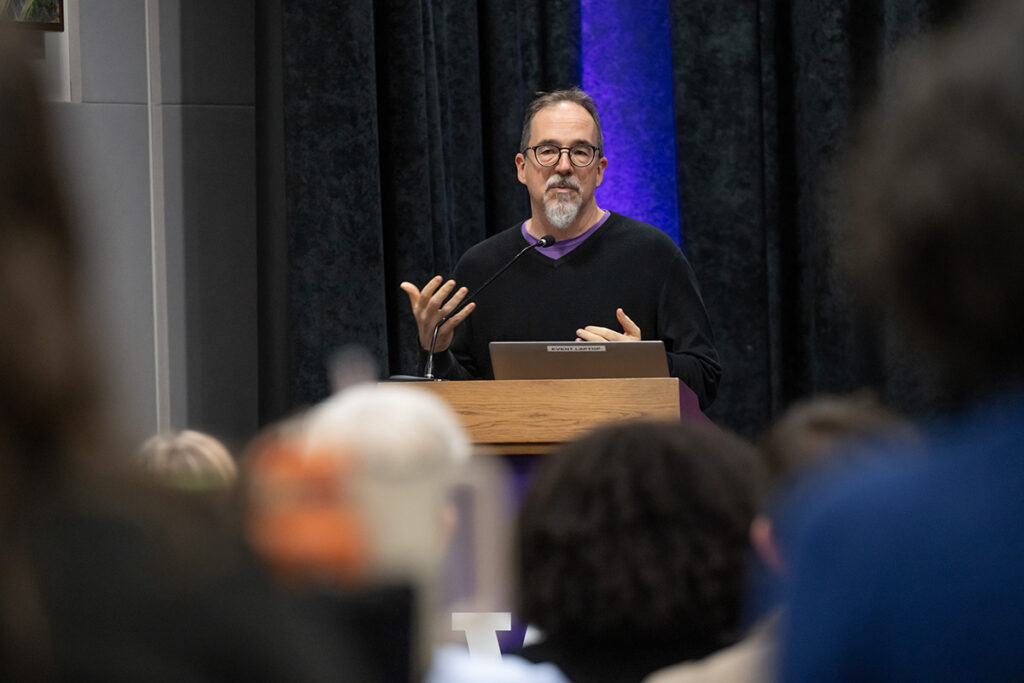
What is one moment from your D.C. seminar experience that has stayed with you?
Courtney McCurdy
I went on the seminar in 2002, right after 9/11. One of the most memorable moments was visiting the Pentagon. The building still showed visible damage, and the atmosphere was heavy. We weren’t allowed to bring our backpacks in, and many of the people we were scheduled to meet were unavailable because they were still responding to the aftermath of the attacks. Another moment that stayed with me was sitting in the Senate during the vote on the Homeland Security Act. It’s striking to look back and realize we were witnessing a pivotal moment in real time.
Hiro Hirano-Holcomb
Sitting in the House gallery was overwhelming in the best way. Being in the same room where major national decisions happen — the symbolism, the gravity, the contradictions — stuck with me. After being in that space, every meeting we had felt more connected to the broader policymaking system.
Ben Studley
My first trip to D.C. was the day after I graduated in 2016. I had applied for a fellowship through the Wounded Warrior Program, which supports veterans transitioning into congressional roles. I had served 16 years in the Navy and didn’t know what came next, but advocacy work, sparked by Professor Charlie Collins, pulled me in. In D.C., I got to see how the “cheese is made” — how offices communicate, how bipartisan work really does happen and how messy but meaningful the process can be. Also, I learned that no one in D.C. knows how to drive.
Saron Almaw
One standout moment was touring the Capitol and noticing which stories were emphasized and which were missing. We heard about architecture and chandeliers but not about the enslaved labor that built the building. That imbalance carried through our meetings. There’s often a polished way D.C. talks about issues but not always with the deeper historical context. That contrast stayed with me.
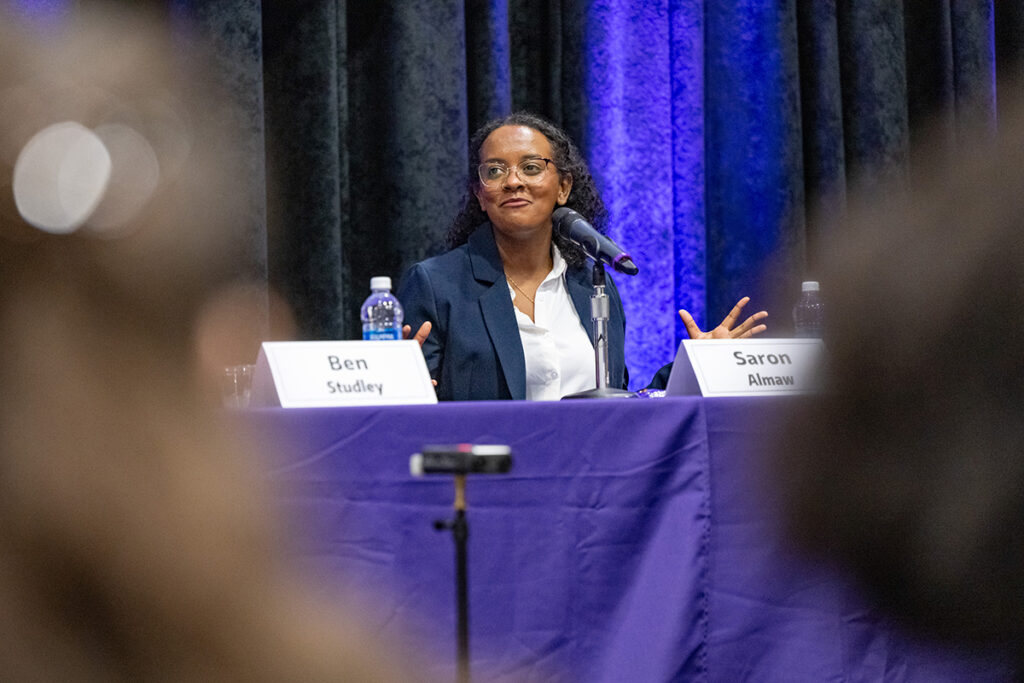
What first drew you into human rights or policy work?
Saron Almaw
I originally studied business, but most of my energy outside class went into activism — organizing, protesting and facilitating workshops. For a long time, I didn’t see human rights work as a career. It felt like something you did out of passion, not something you were paid for. Eventually, I realized the things that made me feel most alive all lived under the umbrella of human rights. That recognition brought me back to school.
Ben Studley
For me, it was professor Charlie Collins. His course shifted the way I understood systems and people. In my current role, I’m often the first person constituents talk to when they’re struggling. No one calls just to say things are fine. They call because something is broken. Helping them navigate those systems is meaningful. Advocacy became personal, not theoretical.
Hiro Hirano-Holcomb
My path started in middle school after I came out as LGBTQ+. I was surprised by how little people understood about LGBTQ+ rights, even though big national conversations were happening. Our school’s GSA [Gender and Sexuality Alliance] was just the adviser and me, but it made me realize that representation and education matter. Later, joining the Legislative Youth Advisory Board showed me how policy can shape human rights. That connection kept pulling me in.
Courtney McCurdy
Even as a child, I couldn’t understand why someone wouldn’t have food or why certain people were spoken to dismissively. I cared deeply about fairness before I had language for it. Once I learned “human rights” was an actual field — and a profession — it felt like the work I had always been drawn to.
How did the D.C. seminar shape or sharpen your interest in this work?
Saron Almaw
Meeting alumni and professionals who had been unsure of their path when they were students meant a lot. They talked openly about taking jobs for experience rather than passion and about navigating setbacks. It helped me understand that human rights work isn’t linear. You keep going because the work matters, not because the path is easy.
Courtney McCurdy
Going in 2002 made the experience especially intense. Visiting the Pentagon so soon after 9/11 and going to the Holocaust Museum had a deep emotional impact. Those moments pushed me to reflect on global crises and human suffering in a way that solidified my commitment to refugee work.
Hiro Hirano-Holcomb
Our meeting with the Friends Committee on National Legislation stood out. They broke down the mechanics of lobbying and how incremental, sustained advocacy can create meaningful change. It made federal work feel less abstract and showed how hope exists in the slow but steady progress people make.
Ben Studley
D.C. reinforced for me that “this too shall pass.” Even in difficult political climates, there are people working behind the scenes to get things done. Staff matter. Advocacy matters. Showing up matters. And engagement doesn’t only happen in D.C. — talk to us, invite us to your events, tell us what you need. We’re here to help.
What support allowed you to get involved in this work as undergraduates?
Ben Studley
My biggest source of support was the faculty and staff. People like Bruce, Camille [Walsh] and Charlie believed in me, and that kind of mentorship is life changing. Their guidance helped shape my academic and career trajectory.
Courtney McCurdy
I was a nontraditional student, and UW Bothell took a chance on me. That changed my life. AmeriCorps also gave me my first experience working in the Somali community, which shaped the rest of my career. Access and opportunity were essential.
Hiro Hirano-Holcomb
I had privilege — financial support from my parents, acceptance of my identity and the stability to volunteer and explore. Not everyone has that. Access shouldn’t depend on privilege, and I want to help expand those opportunities for others.
Saron Almaw
My experience was very different. I’m an immigrant and one of seven kids, and I always worked — often two jobs while in school. I couldn’t have participated in the D.C. seminar without funding. Later, a scholarship allowed me to intern at World Relief, which changed my trajectory. These opportunities taught me that resilience — and access — shape what’s possible.
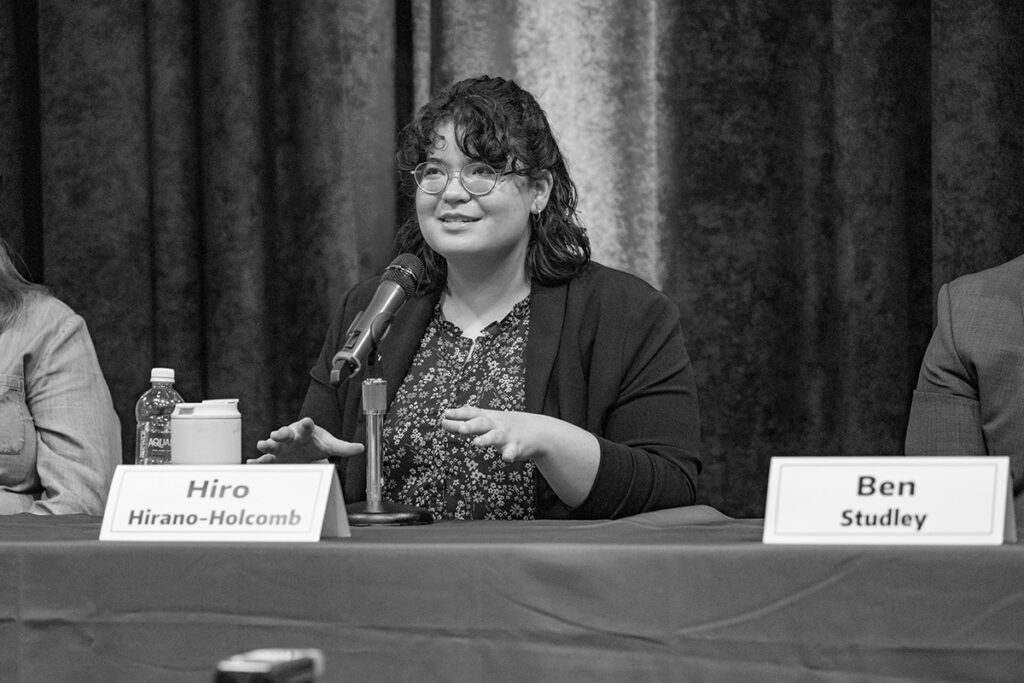
“Access shouldn’t depend on privilege, and I want to help expand those opportunities for others.”
Hiro Hirano-Holcomb
You can help ensure UW Bothell students continue to advocate for human rights where it matters most by supporting the Washington, D.C., Human Rights Program Travel Assistance Fund. Your gift removes financial barriers and opens doors for students to participate in life-changing advocacy and learning experiences.
Read more about how the scholarship has impacted UW Bothell students.